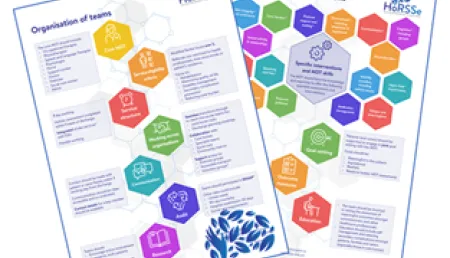

This tackled a lack of existing evidence and guidance causing inconsistent care, fragmented pathways (like spasticity and pain management), resource shortages, and unclear roles across health, social care, and voluntary sectors – all deepening inequalities in the care provided.
The 11 consensus statements outlined essential elements including:
- Core multidisciplinary teams (occupational therapists, physiotherapists, speech/language therapists, nurses).
- Seven-day service delivery with assessments within one week of discharge.
- Specialist care for issues like skin/continence, mood, and mobility.
- Flexible multi-agency working.
- Shared goal-setting with accessible outcome measures.
- Education for carers, commissioners, and health professionals.
These insights led to the creation of practical infographics and resources, influenced guidelines to expand post-discharge rehabilitation access, informed changes to the Sentinel Stroke National Audit Programme and advanced research team careers including PhDs and clinical academic roles at the National Rehabilitation Centre.
To download the infographic, click here.