Topic
Date published
22/05/2026

Physical activity is as important as medication for keeping older people healthy and happy in a new parliamentary report influenced by knowledge gained from studies funded by ARC East Midlands.
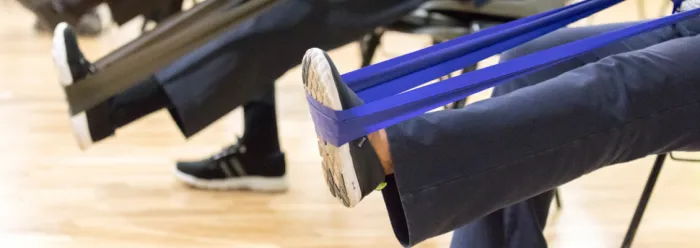
Physical activity should be at the heart of the NHS’s support for older people and is as important as providing medication, the report called Healthy Ageing: physical activity in an ageing society by the Health and Social Care Committee has said.
The report recommends strength and balance programmes and evidence-based interventions in care homes to prevent falls and frailty, with research involving ARC East Midlands cited.
This included the PhISICAL study, investigating the implementation of the Falls Management Exercise (FaME) Programme, leading to the development of the Falls Management Exercise (FaME) Implementation Toolkit, which was funded by the predecessor of the NIHR ARC East Midlands.
Other research connected to the NIHR ARC East Midlands included the FLEXI Study (FaLls EXercise Implementation), a collaboration with NIHR ARCs Greater Manchester and South West, and funded by NIHR ARC Wessex, that worked with local health partners to scale and embed the ground-breaking FaME programme, and the FinCH Implementation study, which investigated the use of the Action Falls programme in care homes alongside NIHR ARCs Wessex, North East and North Cumbria (NENC) and Greater Manchester.
Professor Elizabeth Orton, the ARC East Midlands Theme Lead for Building Resilience in Later Life, was the lead researcher for the PhISICAL and FLEXI studies and gave evidence to the Health and Social Care Committee when they were gathering information for the report.
Professor Orton, who is also a Professor of Public Health at the University of Nottingham and a Consultant in Public Health at Leicestershire County Council, said: “This report highlights that physical activity is not an optional extra for older people but a core part of healthy ageing.
"Our research shows that evidence-based strength and balance programmes can be successfully implemented and should be embedded into routine NHS and care practice to prevent falls, support independence and improve quality of life.”
According to the report, boosting resilience to illness, frailty and falls through physical activity will be key to keeping the country’s ageing population healthy and living independently for longer.
It argues that this change could be fundamental to the Government’s objective of switching the NHS’s focus from treating illness to preventing it, helping stabilise the rising cost of funding the health service as demand continues to rise.
The report follows the cross-party Committee’s Healthy Ageing inquiry. It recommends:
The Committee also calls for a national conversation and a cultural shift in the way that ageing is perceived and talked about in society.
Negative stereotypes can leave older people feeling resigned to becoming inactive, at the point in their lives when a sedentary lifestyle leaves them even more vulnerable to illness, the report said.
The new Health and Social Care Committee report is available here.