Topic
Date published
08/12/2025

Meet Bettina Wallace, a mother, grandmother and respected community advocate in Nottingham who is championing a different approach to dementia care research.
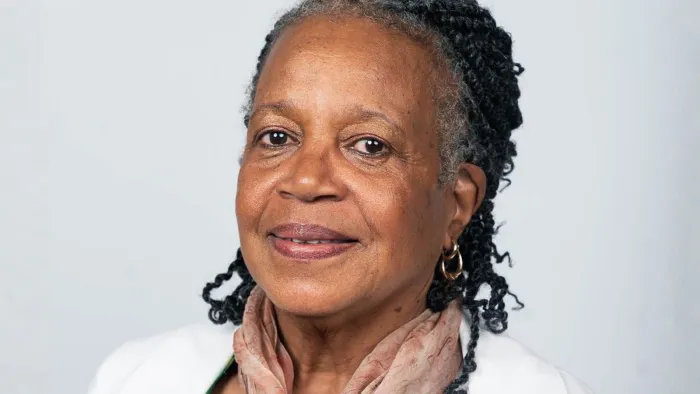
As a co-researcher with NIHR ARC East Midlands on the DEM-COMM dementia capacity programme, she brings researchers and African Caribbean communities together from the start. Her story shows why genuine community involvement in research matters.
Bettina's path to becoming a co-researcher was not planned. Growing up in Jamaica and moving to England as a child, she watched her mother battle dementia.
She realised early on that services were not meeting her community's needs, and she decided she needed to do something about it.
When her mother was diagnosed, Bettina went with her to appointments. She remembers clinical tests that felt disconnected from the real person in front of her, such as drawing a clock face and answering questions about political figures. These experiences shaped her determination to make things better.
In 2023, Bettina joined the DEM-COMM research project, working with Dr Orii McDermott to co-produce a culturally appropriate dementia awareness training platform.
She has become essential in bringing research to life within African Caribbean communities. In a landscape where Black communities are often sceptical of university academics, her presence and credibility open doors.
Her approach is simple but powerful: build trust, create community links, then create opportunities to demonstrate that researchers can be trusted.
Bettina says: "I don't see myself as an expert. I'm just me. I'm hands and feet on the ground. I am a key messenger to link my community to dementia knowledge and researchers."
This project recognised Bettina as a learner, not just a contributor. She has attended dementia care training including UCL Cognitive Stimulation Therapy and Liv-Dem training.
These opportunities, made possible by the project's commitment to funding co-researchers as well as researchers, ensure she can feed this knowledge back into her community, extending the impact far beyond her own development.
Bettina has clear messages for researchers engaging with African Caribbean communities. She emphasises that research should benefit communities, not just extract information.
Her key principles include:
Bettina demonstrated these principles at the 36th Alzheimer's Europe Conference in Bologna in October 2025. At 72, and without a PhD, she brought decades of lived experience to conversations about how dementia research is conducted.
But her questions go deeper: “Why is dementia absent from clinical research that reaches African Caribbean communities? Why are culturally appropriate resources so limited? Why aren't more Black researchers leading dementia research in their own communities?”
These questions point to real gaps in how research is prioritised and resourced.
Bettina has a powerful message: "If you don't talk about it, you cannot get help."
She recognises that not everyone finds it easy to speak openly, especially when cultural traditions say "we don't talk our private business in public."
But silence keeps people isolated and prevents them from getting support, and Bettina encourages communities to get involved in research.
She says: "We need as a community to get involved in research, because if we don't, we then can't complain that nobody's taking care of us. It's about communities having a voice in deciding what matters and how it should be studied.”
Bettina also encourages people to speak to their GP if they are worried about their memory or notice changes. Getting a professional opinion early is crucial.
Bettina continues to expand her work as a co-researcher with DEM-COMM.
She has started a dementia community group in Nottingham for African and Caribbean people, supported by a local cinema, and is a co-applicant with the SPIN-D Network Plus, working to reduce dementia risk and improve experiences for people living with dementia.
Her expanding involvement across these initiatives demonstrates what is possible when communities are genuinely involved from the start, not as participants in someone else's research, but as true partners in designing, delivering and evaluating solutions.
To download Bettina’s full presentation from the 36th Alzheimer's Europe Conference, click here.
To learn more about the DEM-COMM project on co-producing dementia awareness training resources with African and Caribbean communities, click here.
To connect with Bettina on LinkedIn, visit her profile.