Topic
Date published
20/01/2026

Consistent collection and effective use of resident data across care homes is a vital policy priority for improving care quality and service delivery. Understanding how care home staff collect, interpret and apply this information is essential to ensuring data remains meaningful and supports personalised care planning and ongoing review.
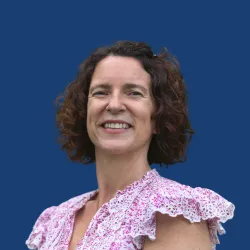
In this blog, Rachael Carroll, Research Fellow for the NIHR ARC East Midlands–funded DACHA-DASH project, explores the work she has been undertaking to support care providers in making better use of data in everyday practice.
As a registered Mental Health Nurse and a Research Fellow at the University of Nottingham, supporting the social care sector to use data effectively combines my skills and passion in both areas.
The DACHA-DASH project started in October 2024 and was funded by the ARC East Midlands. This project has led us to work closely with a small number of professional carers from care homes for older people for 18 months. Together, we have looked at how data is being used to improve care.
When you hear the word data you might think of numbers and analytics, but in fact data is simply information. This can include things like logging what food and drink a person has had, recording what behaviours are likely to calm, excite or unsettle people, and noting hobbies and interests of the people being supported.
Collecting data is something care staff do all the time. I think there are two important things about data – it is more useful if it is accurate and when this data is paired with person-centred actions it can improve care.
For the DACHA-DASH project I interviewed and analysed the views of a small number of people who live in, visit and work in, or with, care homes about what information they think care homes collect about residents. The interview findings were shared with two professional carers and their deputy manager from three care homes.
This provided the basis of four workshops. In the workshops, each team developed an example (known as an exemplar) showing how using data makes a difference to residents’ care. Then, the teams shared their exemplars with other care home staff, software developers and people from the NHS and social services who routinely work with care homes to explore how to get these discussions and ideas about using data embedded into practice.
The basis for one exemplar was when care home staff raised concerns that it is sometimes difficult to know whether you are truly meeting the needs of residents who can’t express themselves verbally. Through taking part in the study, they looked at what data they currently collect and what was missing.
They noted they use the ‘Who I Am’ care plan which contains details about the residents’ career, family relationships and aspects of their personhood that remain historical facts. They also used the ‘Lifestyle’ care plan which focuses on their hobbies and interests. Missing from the data was a measure for capturing quality of life.
Care home staff decided to add a measure they had used in a previous study to ensure this was included. They also added “10 things about me today” which complemented the lifestyle section, bringing the information right up to date on drink preferences and favourite things to do as examples. Now they had a thorough, broad set of data collection tools to help them think about each residents’ care.
The discussion and learning from the workshops were made into posters. These can be seen on the DACHA-DASH webpage for anyone to look at and share. A video about data and its use, aimed at care home staff, has also been made and an academic paper will follow. The project summary was shared as a poster at the British Geriatric Society conference and came first place winner in its category.
It’s been great to see the positive impact of this project. We all want to improve care for everybody, and the examples gathered through this project show the value that data has in doing that. I’m looking forward to continuing with the next stages of this project through to spring 2026.
We’re always keen to work with people who work in social care or are connected to social care for our research projects and anyone who is interested in future research can reach out to me by email: Rachael.Carroll@nottingham.ac.uk.
