Topic
Date published
15/06/2026

Reflections from the PATHFINDER Study on informal caring in Somali and Gypsy and Traveller communities.

By Barbara Czyznikowska, Community Engagement and Inclusion Manager at The Centre for Ethnic Health Research
Carers Week provides an opportunity to recognise the millions of individuals who provide unpaid care to family members, friends and loved ones across the UK. While caregiving is often discussed in terms of service provision, burden and support needs, research suggests that the meaning of caregiving itself varies significantly across cultural contexts.
Findings from the PATHFINDER study, which explored informal caring practices among Somali and Gypsy and Traveller communities, highlight how caregiving is frequently understood, not as a distinct role or identity but as a natural and expected part of family life. This perspective challenges conventional assumptions underpinning many carer support services and raises important questions about how carers are identified, engaged and supported.
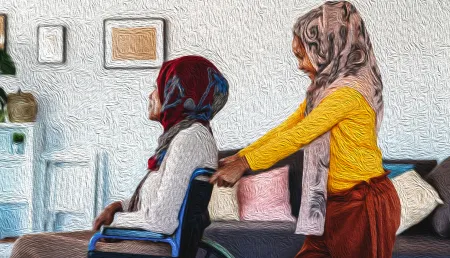
Across both Somali and Gypsy and Traveller participants, caregiving was often described as part of what might be termed the "circle of life". Individuals spoke about caring not as a new responsibility they had assumed, but as a continuation of the care they themselves had once received from parents, grandparents and extended family members.
This understanding reflects a relational rather than individualised conception of care. Participants frequently described caregiving as embedded within family relationships and intergenerational reciprocity. The transition from being cared for as a child to caring for ageing parents, disabled children, spouses or other relatives was viewed as a natural progression rather than a distinct life event. In this sense, caregiving was less about adopting the identity of a "carer" and more about fulfilling existing family roles and obligations.
The study found that caregiving was deeply shaped by cultural values, family expectations and community norms.
Among Somali participants, caregiving was often framed through values of compassion, collective responsibility and faith. Islamic principles of caring for family members and supporting those in need informed how participants understood their responsibilities. Caring was frequently described as both a moral obligation and a meaningful expression of love and commitment.
Similarly, among Gypsy and Traveller participants, caregiving was strongly associated with family loyalty, independence and the expectation that relatives should care for their own family members. Caring was viewed as an important aspect of maintaining family cohesion and honouring longstanding cultural traditions.
Across both communities, caregiving was therefore not solely a practical activity. It represented an expression of identity, belonging, reciprocity and respect for family relationships.

A significant finding from the PATHFINDER study was that many participants did not identify with the label "carer", despite undertaking substantial caring responsibilities.
This has important implications for policy and practice.
Many support services rely on individuals first recognising themselves as carers before seeking assistance. However, when caregiving is understood as a normal family responsibility rather than a distinct role, individuals may not perceive such services as relevant to them. Seeking external support may also be viewed as inconsistent with cultural expectations surrounding family caregiving.
As a result, carers may remain invisible within formal support systems despite experiencing considerable emotional, physical and practical demands.
The findings therefore suggest that low engagement with services should not necessarily be interpreted as a lack of need. Rather, it may reflect differences in how caregiving is conceptualised and understood.
The experiences shared by participants highlight the importance of recognising carers whose contributions often remain unseen.
These are individuals who provide extensive support while simultaneously managing employment, parenting responsibilities, financial pressures and their own health needs. Yet many would not describe themselves as carers. They identify first and foremost as daughters, mothers, wives, husbands, sons or other family members.
Recognising these hidden carers requires moving beyond standard definitions of caregiving and developing approaches that are sensitive to different cultural understandings of care.
This includes building trust with communities, improving awareness of available support and ensuring that services are designed in ways that acknowledge and respect culturally grounded caregiving practices.
The concept of the "circle of life" offers a valuable lens to understand caregiving within Somali and Gypsy and Traveller communities. It highlights how care is embedded within relationships, family structures and cultural traditions that extend across generations. For many participants in the PATHFINDER study, caregiving was not viewed as a role they chose or an identity they adopted. Rather, it was understood as a continuation of a lifelong cycle of giving and receiving care.
Recognising these perspectives is essential if health and social care systems are to engage effectively with communities whose experiences and understandings of caregiving may differ from dominant policy narratives. By acknowledging the cultural meanings attached to care, services can move towards more inclusive and equitable approaches that ensure all carers are recognised, valued and supported.
The resources developed from the PATHFINDER study, including the full report, executive summary, carers' voiceovers and practical guidance for health and social care professionals, are available on the ARC Store Resources.