Topic
Date published
29/10/2026

The Centre for Ethnic Health Research, part of the NIHR ARC East Midlands, asks what researchers can do differently to make research more inclusive. Two community members share their reflections on representation, trust and being heard.

By Dr Sophie Leonardi, CEHR Operations Manager and ARC East Midlands EHI Theme Manager, and Fiona Hutchinson, Community Engagement Officer, with reflections from community members Theresa and Viv.
October marks Black History Month in the UK, providing an opportunity to celebrate Black history, culture and achievements. This year’s theme, Honouring Our Communities, is also a chance to reflect on the experiences that continue to shape health inequalities.
People from ethnic minority communities have not always been adequately represented or involved in health and care research. Past experiences of healthcare and research can influence how people feel about taking part and the trust they place in research.
So rather than focusing only on how to encourage more people to participate, we need to ask: what can researchers do differently to make research more inclusive?
Inclusive research means considering who helps shape research, what might prevent people from getting involved and whether research is designed with the communities it aims to serve in mind.
Researchers can involve communities early, build relationships with trusted local networks, use accessible language and consider barriers such as caring responsibilities and digital access. Engagement should not be one-size-fits-all. Creating inclusive opportunities is the responsibility of researchers and research organisations.
We spoke to Theresa and Viv, two women who have engaged with community health engagement activities. Their reflections highlight the importance of representation, personal connection and knowing that sharing your experiences can make a difference.
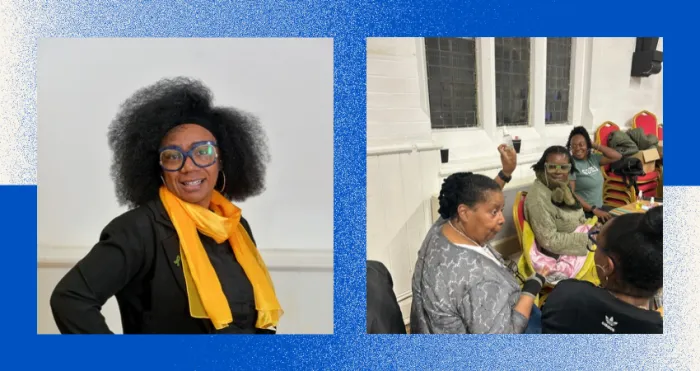
Theresa had welcomed opportunities to take part in research, but felt “more people need to hear about what they can get involved in”.
Viv agreed that more needed to be done to reach communities and raise awareness. For her, seeing people from her community involved in research was a relatively recent experience.
Representation in health information matters, too. Theresa reflected: “When I see a poster with someone that looks like me, that makes me think ‘Oh, they have considered how this affects Black people’. I have been so used to not being represented in information and services, so it is always nice to feel like some consideration has been taken to include us.”
Viv described the feeling of being overlooked: “It always feels like Black people are a second thought.”
Their experiences remind us that inclusion is not simply about inviting people to participate. It is also about showing communities that they have been considered from the outset.
Trust grows through personal connection and opportunities to ask questions. Theresa highlighted the importance of “knowing someone you trust is involved or hearing about it from someone you know that has taken part.”
For Viv, “putting a face to a name helps,” alongside being able to ask questions and understand what taking part involves.
Both women valued opportunities to speak directly with researchers. Theresa described meeting researchers at Sista Strands, a community programme for Black women in Leicester, as a positive experience because people could ask questions and understand what they were signing up for.
Viv emphasised the importance of accessible communication: “Speak to us in plain English. I am a retired nurse so I understand some of the terminology but give it to us in simple terms that everyone can understand.”
Inclusive engagement cannot end once people share their views. Theresa valued researchers following up after public involvement discussions, because it showed they were genuinely interested in her experience. She wanted to know: “Did it make a difference to the research and what happens next.”
For Viv, meaningful involvement means “just being listened to”. She prefers face-to-face meetings because she is less comfortable with technology, and wants to know that questions are relevant to people's experiences.
Both were clear that researchers must show what happens as a result. Theresa wanted to know whether contributions led to improvements in how Black people are treated. Viv’s expectation was simple: “Meaningful change.”
Inviting people to share their experiences is only the starting point. Researchers also need to listen, respond and explain how those contributions have influenced decisions.
The Centre for Ethnic Health Research is hosted by the University of Leicester within the ARC East Midlands. We are working to support more inclusive research and address ethnic health inequalities, and we help researchers to:
We bring community connections and engagement expertise to this work, and support researchers to involve communities meaningfully throughout the research process.
You can read more in our September newsletter on inclusive research.
As Black History Month comes to a close, it is important that we continue to reflect on our research and consider:
This reflection needs to continue throughout the year, shaping how we design, deliver and share research.
Inclusive research is not just about who takes part. It is about who is heard, whose experiences shape decisions and whether people can see that their contributions matter. Building trust requires researchers to listen, respond and take responsibility for making research more inclusive.